
Singapore has transformed from a fragmented startup scene in 2011 into one of the world’s top-10 innovation hubs. Few people know this journey better than Gang Chern Sun, Programme Director at the Korea SMEs and Startups Agency (KOSME) Singapore. From co-founding BLOCK71, Singapore’s first major startup cluster, to today, fostering cross-border opportunities for Korean founders, Chern Sun has been at the heart of the region’s entrepreneurial evolution. In this interview, he shares his perspective on ecosystem growth, funding realities, and why Singapore remains the best launchpad for Korean startups in Southeast Asia.
From BLOCK71 to KOSME: Building Bridges in Asia’s Startup Landscape
Singapore’s startup ecosystem may today be a global top-10 hub, but its roots are surprisingly recent. In 2011, the scene was still young, fragmented, and lacking cohesion. It was in that context that BLOCK71 was born, designed not just as an office space but as a community where founders could find solidarity.
Within six months, BLOCK71 had grown into Singapore’s largest startup cluster, hosting more than 250 startups and 30 incubators under one roof. It transformed the city’s entrepreneurial culture and became the heartbeat of its ecosystem.
The entrepreneurial journey is long and often lonely; our vision was to build an open community where like-minded founders could come together – to share their struggles, celebrate their wins, and more importantly, support one another.
– Gang Chern Sun, Programme Director @ KOSME (Singapore)
Fast forward to today, and Singapore is ranked among the world’s most vibrant startup hubs. Liquidity has surged, with the country accounting for around 60% of Southeast Asia’s total funding. More than 200 accelerators and 400 venture firms form a dense support structure, and valuations across portfolios have multiplied more than 100 times.
The ecosystem is still relatively young. Against the backdrop of economic headwinds and a rapidly evolving technology landscape, there remain many areas where we must continue to improve, to take the ecosystem to the next level.
Why Singapore Should Be Korean Startups’ First Port of Call
When asked why Korean startups should choose Singapore as their entry point into Southeast Asia, Chern Sun offers three compelling reasons.
1. Headquarters Capital of Asia Pacific
Singapore has been the top location for regional headquarters for more than a decade. According to the Global 2000 list, it is ranked #1 in Asia for regional headquarters among the top 100 technology MNCs listed on Forbes. The Singapore Economic Development Board reports that over 37,400 international companies, including more than 7,000 multinationals and 150 international organizations, are based here.
This means that for most companies operating across Southeast Asia, the key decision-makers are based in Singapore, even if their service delivery takes place in other markets. For startups, this centralization of leadership shortens sales cycles and brings them closer to the people who matter most.
2. Cross-Sector Powerhouse
Singapore is a hub across multiple industries. It is Asia’s #1 financial center, the world’s #1 shipping hub, and one of Asia’s leading aviation centers. Most recently, it was ranked #1 in Asia (and #3 globally) as a Smart Nation.
For startups, this cross-sector dominance translates into diverse business opportunities — whether in fintech, logistics, aerospace, or digital transformation. The convergence of these industries in one location creates a fertile ground for cross-industry partnerships, pilots, and proofs of concept.
3. World’s Easiest Place to Do Business
Singapore is consistently ranked as the best country in the world for doing business. Its stable government, transparent legal system, and favorable business policies provide predictability in a world of uncertainty. The country also offers 27 Free Trade Agreements with major international economies, opening access to global markets.
For startups specifically, Singapore’s progressive tax model provides an additional advantage, with lower rates for smaller, younger companies.
However, Chern Sun cautions that companies do need to take note that business operations in Singapore are relatively more expensive than the neighboring countries; these include office rental, hiring costs, living expenses, accommodation, etc. Founders must weigh these costs against the advantages of access, credibility, and speed to market.
Choosing Between Southeast Asian Hubs
Other Southeast Asian cities are rising as startup hotspots. How should founders decide between them? For Chern Sun, the answer is simple: follow the customer.
Startups that are close to their decision-makers not only provide faster support but also gain sharper insights into customer behavior, regulatory contexts, and competitive pressures. In short, proximity fuels adaptability — the single most important factor for scaling across Southeast Asia’s fragmented landscape.
The Korean Community Advantage
Among the many international startup communities in Singapore, the Korean ecosystem is unique for its cohesion and solidarity. While some expatriate founder groups remain fragmented, Korean entrepreneurs have built a culture of consistent mutual support — from informal meetups to structured networking events and collaborative ventures.
This sense of unity delivers tangible benefits. By connecting with fellow countrymen — whether founders, investors, or corporates — Korean entrepreneurs gain a trusted community to exchange ideas, share experiences, and even troubleshoot challenges that others have already faced. For many, this familiar support system makes the difficult process of scaling abroad less daunting.
The community also opens doors to resources that would otherwise be difficult to access. Peer-to-peer learning helps startups avoid common mistakes, while connections forged within the community often lead to collaborations and partnerships that strengthen their competitive edge.
At the K-Startup Center Singapore, Chern Sun and his team actively nurture this ecosystem by organizing regular networking events with key Korean institutions. In 2023, they partnered with the Korea Development Bank (KDB); the following year with the Korean Embassy; and most recently with KB Bank. These partnerships provide Korean founders with not only valuable connections but also credibility and visibility in the broader Singaporean startup ecosystem.
Funding Tightens, Focus Shifts
Global headwinds, from trade wars and inflation to rising geopolitical tensions, have made investors more cautious worldwide. Singapore has not been spared, but it continues to hold a stronger position compared to its regional and international peers.
In 2024, total equity funding for tech startups in Singapore fell to US$4.8 billion, a sharp decline of more than 50% from its 2022 peak. The downturn mirrors global trends, but Singapore still outperforms the region: it accounted for around 60% of all equity deals in Southeast Asia, underlining its continued dominance as the regional funding hub.
Later-stage startups have been most affected by this contraction. Valuations in this segment had run far ahead of fundamentals during the peak years, and with public markets now weak, investor enthusiasm has cooled. Growth-stage and pre-IPO companies face tougher fundraising conditions, forcing many to delay expansion plans or recalibrate their valuations.
Early-stage startups, however, have held up far better. Some investors even view the current climate as a buying opportunity, with disciplined, high-potential startups available at fairer valuations than in recent years.
The broader shift is also clear: investors are moving away from speculative “grow at all costs” models and prioritizing sustainable business fundamentals.
The traditional burn-to-grow model has fallen out of favor, with investors increasingly focused on startups that demonstrate a clear revenue model and sustainable growth trajectory.
– Gang Chern Sun
For Korean founders, this means adjusting their fundraising narratives. Instead of focusing on speed or scale alone, they must show a path to profitability, credible customer traction, and resilient business models aligned with Southeast Asia’s realities.
Positioning to Attract Singapore-Based Capital
Investors in Singapore are generally more conservative and place strong emphasis on the founders themselves. For Korean startups, this means that spending time on the ground — building relationships, earning trust, and raising visibility within the investment community — is critical to securing funding.
Most funds in Singapore are also Southeast Asia–focused. Startups that can demonstrate a clear regional strategy, with validated traction or insights into the market, will stand a stronger chance of attracting capital.
Warm introductions matter. A strong referral, ideally more than one, can significantly improve your chances of getting investor attention.
– Gang Chern Sun
Common Pitfalls to Avoid
It’s not only Korean startups that face challenges when expanding abroad. Many founders enter international markets after achieving product-market fit at home, often with the assumption that success in their domestic market will translate seamlessly overseas.
But this assumption rarely holds. What works in one market may not resonate with customers in another. Startups must be willing to review their product offerings and adapt their go-to-market strategies — especially in Southeast Asia, where the landscape is highly diverse and fragmented.
What works in one market may not necessarily resonate with the customers in another.
– Gang Chern Sun
The Role of Local Talent
When it comes to international expansion, success is less about nationality and more about hiring the right talent. A common mistake is defaulting to candidates from the home country for reasons of convenience or language, even if they lack the deep local knowledge and networks needed to navigate a new market. Human capital is often the single most critical factor in determining whether expansion succeeds or fails. Hiring competent local talent who understand market nuances can significantly accelerate entry.
Equally important is empowerment. Too often, companies centralize decision-making at headquarters, applying domestic assumptions that don’t translate abroad. This slows execution, misaligns strategy, and weakens competitiveness.
Startups that succeed internationally are those that trust and empower their local teams; enabling them to chart their own direction, respond quickly to customer needs, and adapt to the realities of the market.
– Gang Chern Sun
Advice for First-Time Founders
For Korean founders arriving in Singapore for the first time, Chern Sun emphasizes one priority above all others: market validation. Startups should take the opportunity to study their competitors closely, connect directly with potential customers, and test whether their solution truly fits the local market.
Market validation. When you are in Singapore, take the opportunity to research your competitors and your potential customers. Speak to them in person if possible; validate if your solution works in this market.
– Gang Chern Sun
Key Takeaways
- Ecosystem Evolution: Singapore has grown from a fragmented scene in 2011 to a global top-10 hub.
- Why Singapore: Decision-makers, sectoral depth, and a world-class business environment.
- Funding Reality: Capital is tighter, especially at later stages, but early-stage deals remain healthy.
- Investor Shift: Growth-at-all-costs is out; sustainability and fundamentals are in.
- Korean Advantage: A cohesive community offers unique support networks.
- Success Formula: Local adaptation, empowered teams, and relentless validation.
About Gang Chern Sun
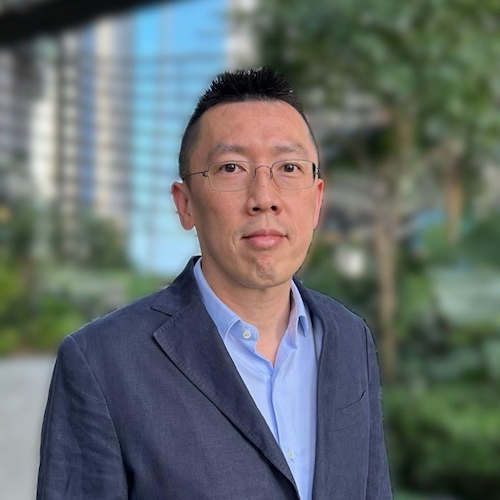
Gang Chern Sun is the Programme Director at K-Startup Center Singapore, a government agency under the Korea SMEs and Startups Agency (KOSME). He drives efforts to foster international collaboration between South Korea and Southeast Asia’s innovation ecosystems; this includes strategies and initiatives to accelerate startup scaling through cross-border market access, investment facilitation and business partnerships.
Chern Sun formerly headed the Incubator-Accelerator programmes at NUS Enterprise. He was also instrumental in founding ‘BLOCK71’ – one of Asia’s most prominent startup hubs, which has since expanded internationally as a key platform for innovation and global connectivity.
Connect with Gang Chern Sun on LinkedIn.
Join us on an exciting journey to explore the vibrant world of Korean lifestyle – from the latest beauty tips to the hottest tech and so much more on Facebook, Twitter, LinkedIn, and Flipboard.